

Assembly Automation
for Camera Modules
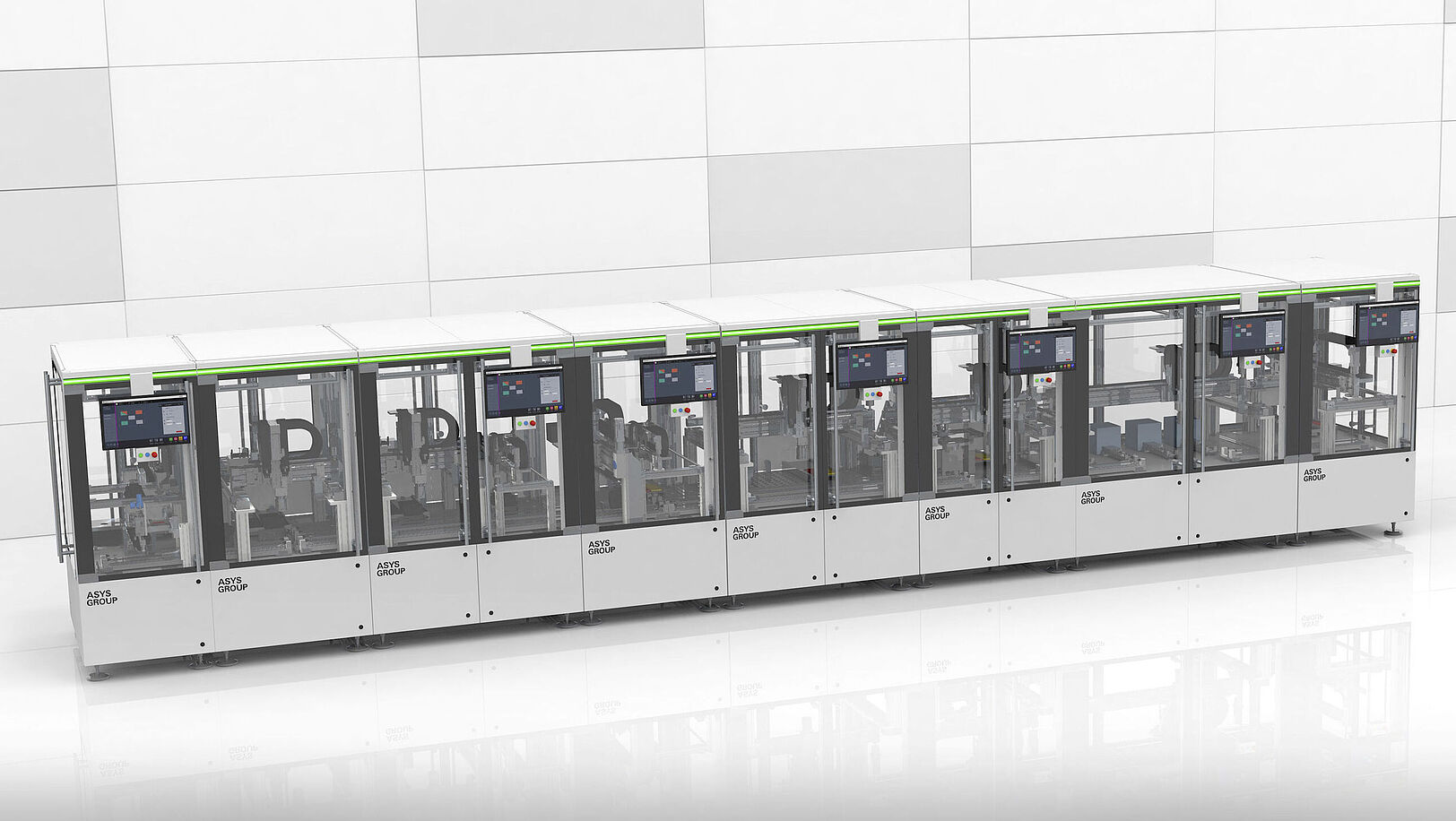
Camera modules are among the most critical sensors in modern driver assistance systems and are a key component on the path to autonomous driving. This means they must meet the highest standards of cleanliness, precision, traceability, and process stability. With the modular INVENTUS system, ASYS provides flexible and scalable assembly automation for the series production of camera modules—including both satellite cameras and cameras with integrated control units.
Whether for pilot production or mass production: With the INVENTUS modular system, production lines can be flexibly expanded, adapted to new camera generations, and operated cost-effectively over the long term.

 Faster Ramp-UpThanks to years of expertise in camera module manufacturing
 Easy to ScaleUp to autonomous material logistics
 From a Single SourceFrom specific process automation to fully integrated turnkey solutions
Fully Automated Production of Camera Modules
The modular INVENTUS system for assembly automation enables the seamless integration of all relevant process steps in camera module manufacturing, such as:
|
|
![[null]](/fileadmin/_processed_/8/d/csm_ASYS_SynapticaOS_Material_Inbound_Module_6_Screens_b6eadc0925.jpg)
Process Reliability and
Data Transparency
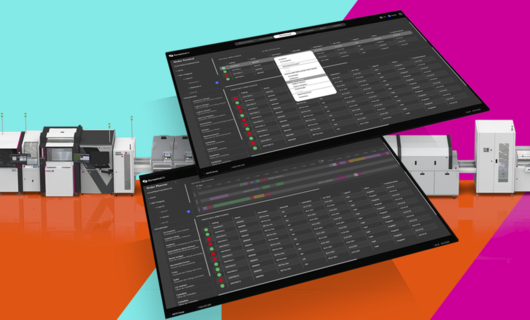
The SynapticaOS software platform serves as the central foundation for consistently transparent, traceable, and optimized production processes in the manufacture of camera modules.
- Full traceability: of all materials, components, and parts used
- Process interlocking: ensures that all production steps are carried out in the correct order
- Product change by click: convenient and quick product change at the touch of a button
- Meaningful statistics: at process and machine levels for continuous line optimization and improved OEE
Contact
We would be happy to advise you on all aspects of automating your camera manufacturing process.
Contact us for a customized solution.
Laser Technology for Modern Camera Manufacturing
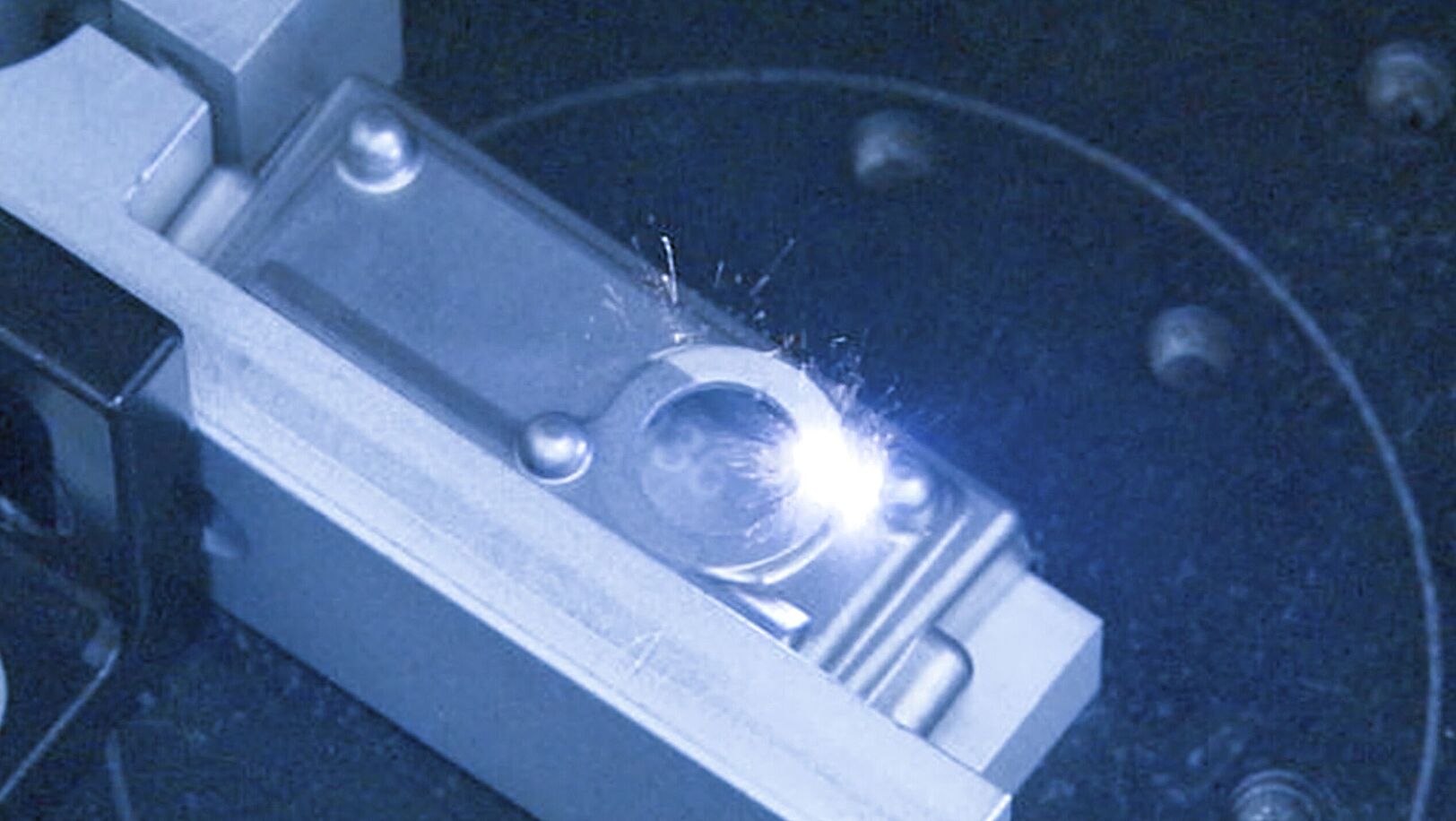
Our Laser Labs bring together extensive expertise in all laser-related processes involved in camera manufacturing:
- Laser depaneling: stress-free and highly precise separation of small PCBs — even when components are close to the edge, without mechanical stress
- Laser cleaning: preparing adhesive surfaces for strong bonds
- Laser welding: material-locking joining of housing halves with maximum leak-tightness
- Laser marking: permanent markings for traceability and individual customer logos
Microclimate directly within the production cell
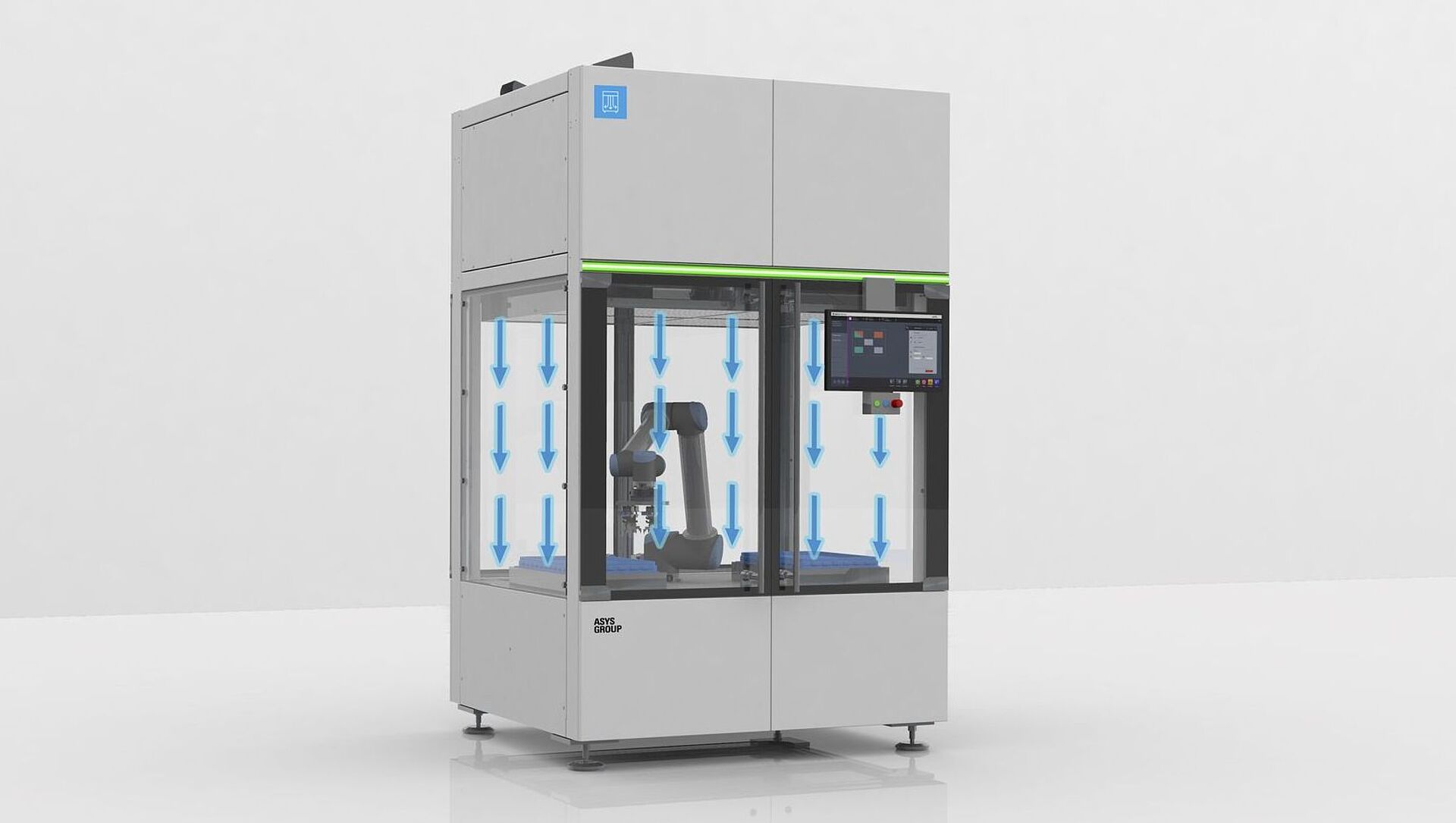
Even the smallest particles, temperature fluctuations, or deviations in humidity levels can significantly impair the functionality and safety of sensitive products. The optional climate module of the INVENTUS system provides precisely these conditioned environments—directly within the production cell. This makes it possible to create optimally conditioned assembly areas without the need for costly climate control of the entire production facility.
- Cleanroom classes from ISO 5 to ISO 8
- Relative humidity from 3% to 70%
- Temperature range from 16°C to 50°C
ASYS FAQ
Camera Modules
A fully automated camera module manufacturing process integrates all key process steps into a continuous production line. First, the printed circuit boards are tested and programmed (board testing and flashing). This is followed by high-precision active alignment, during which the sensor and optics are precisely aligned with one another. Laser depaneling precisely separates the assemblies without applying mechanical stress. Afterward, functional and end-of-line tests ensure product quality. Laser marking provides each module with a permanent identification mark for traceability. Finally, the finished camera modules are automatically packaged (Packaging).
Camera modules place high demands on cleanliness and environmental conditions. With the optional climate control module from the INVENTUS modular system, specific conditions can be created directly within the manufacturing cell:
- Cleanroom classes from ISO 5 to ISO 8
- Relative humidity from 3% to 70%
- Temperature ranges from 16 °C to 50 °C
This results in optimally conditioned assembly areas for sensitive optical and electronic components.
A multifunction camera is a camera system that performs various functions within modern advanced driver-assistance systems (ADAS). It monitors the vehicle's surroundings and provides the necessary image data for assistance functions. As such, it is one of the most important sensors on the path to automated and autonomous driving.
The industrial manufacturing of camera modules for automotive applications places significantly higher demands on precision, process reliability, and traceability. In addition, technologies such as active alignment, laser processes, end-to-end traceability, and controlled cleanroom and environmental conditions are employed. The goal is to achieve reproducible quality for safety-critical applications in vehicles.
Laser technology performs several key functions in camera module production. Laser depaneling enables stress-free and highly precise separation of printed circuit boards, even when components are located close to the edge. Laser cleaning prepares surfaces for stable connections. Laser welding ensures material-locking and leak-tight housing joints. Laser marking provides camera modules with permanently legible markings for traceability throughout the entire product lifecycle.
Active Alignment is a high-precision alignment process in which the image sensor and optics are actively positioned relative to one another during assembly. This allows the optical properties of the camera module to be optimized and meets the high quality requirements of modern driver assistance systems.
The SynapticaOS software platform enables the seamless documentation of all materials, components, and process steps. In addition, laser markings ensure permanent identification of the products. This enables complete traceability throughout the entire manufacturing process.
The INVENTUS modular system is based on a modular platform architecture and can be flexibly adapted to new product variants and manufacturing requirements. This makes it possible to expand existing systems, integrate new processes, and operate production lines cost-effectively over the long term.

![[null]](/fileadmin/_processed_/a/8/csm_ASYS_MATERIAL_LOGISTICS_AMR_Reel-Container_SMD-Line_1c64681c3d.jpg)